



- Economics, University of Nairobi, 2013
- Food security and economics: Introducing cassava growing to community
- Murangua
- Mentor: Catherine Kaimenyi
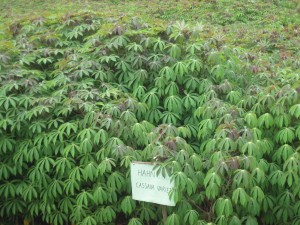
Michael Murigi was born to poor parents and often had to skip grade school to work in nearby coffee farms to earn money for clothes and school supplies. Because of the current lack of food in his village and insufficient rains, Michael’s proposed project is to encourage the planting of cassava in his village. Cassava is an indigenous crop that is fast growing and well adapted to the dry environment and local plant diseases. The starch filled roots can be used like potatoes or ground into flour, while the leaves can be used like spinach. He believes adding cassava as an alternative crop can increase food security and increase income among the villagers, “It is shameful that in the 21st century economic activities are almost halted due to hunger.”
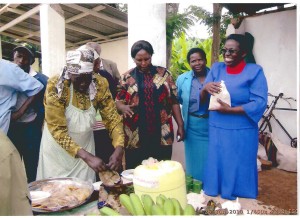 Group had a stand at Muranga District Agricultural Show (pictured left) where they displayed cassava products including Mandazi (baked from cassava flour), crisps, porridge. Pictured are members of his group preparing cassava for the crowd. Cassava plants shown below.